

ESP32 DevKit V1 pinout — safe pins, strapping pins and what to avoid
Which ESP32 pins are safe to use, which are input-only, which break the boot and why ADC2 stops working the moment Wi-Fi starts. Keep this tab open.
Embedded systems engineer · founder, Electronixity
Embedded systems engineer and the founder of Electronixity. Builds the projects on this site on an actual bench, with the same parts the store ships — so the wiring in a tutorial matches what turns up in the box.
I design and build embedded hardware — Arduino and ESP32 firmware, sensor interfacing, motor control and the small, unglamorous power problems that decide whether a prototype survives its first week. Electronixity grew out of that work: sourcing decent components in India was harder than building with them, so we started stocking the parts we actually use. Everything published here gets built before it gets written. If a tutorial says a sensor is active-LOW, it's because that's what the module on my bench did, and the bill of materials links to the exact part I used rather than a generic category page. Where a build has a failure mode, it's documented in the troubleshooting section instead of being quietly left out. I also take on student and academic projects through Electronixity's project service, which is where a lot of the troubleshooting content on this site comes from — the same handful of mistakes turn up every semester.
Which ESP32 pins are safe to use, which are input-only, which break the boot and why ADC2 stops working the moment Wi-Fi starts. Keep this tab open.
Your ESP32 reboots in a loop and the serial monitor says brownout detector was triggered. Here is what is actually happening, ranked by likelihood.
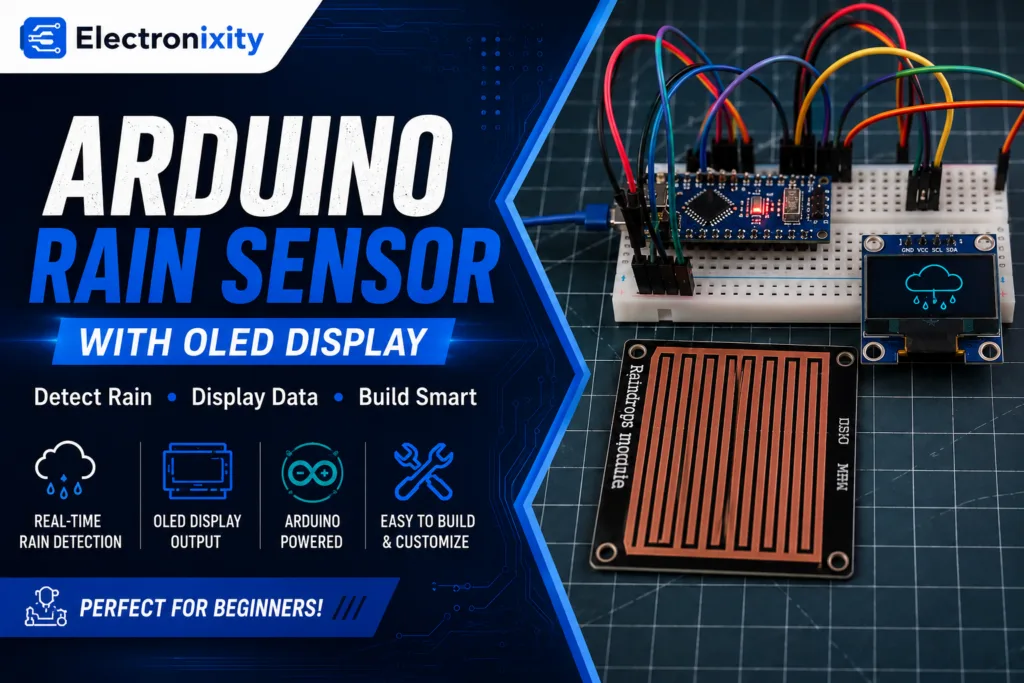
3 min readBuild a rain-sensing wiper with an Arduino Nano, a rain sensor, an SG90 servo and a 0.96in OLED — wiring table, full sketch and the failures to expect.
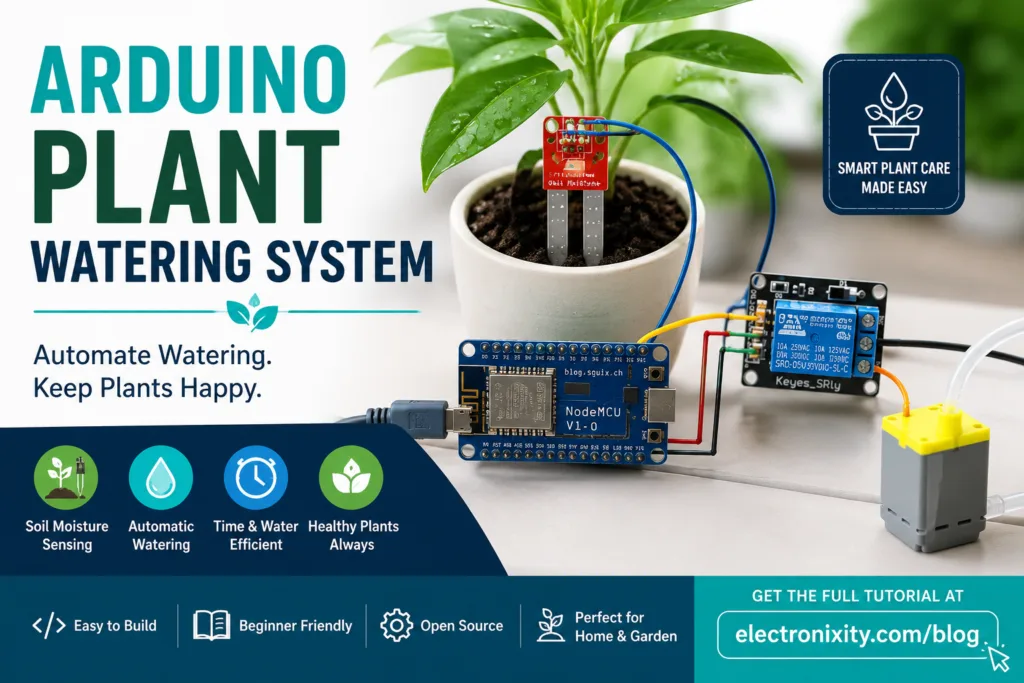
3 min readWire a soil moisture sensor, a relay and a mini pump to an Arduino so your plants water themselves — with the calibration step most guides skip.